Steak Doneness: A Butcher's Temperature Guide
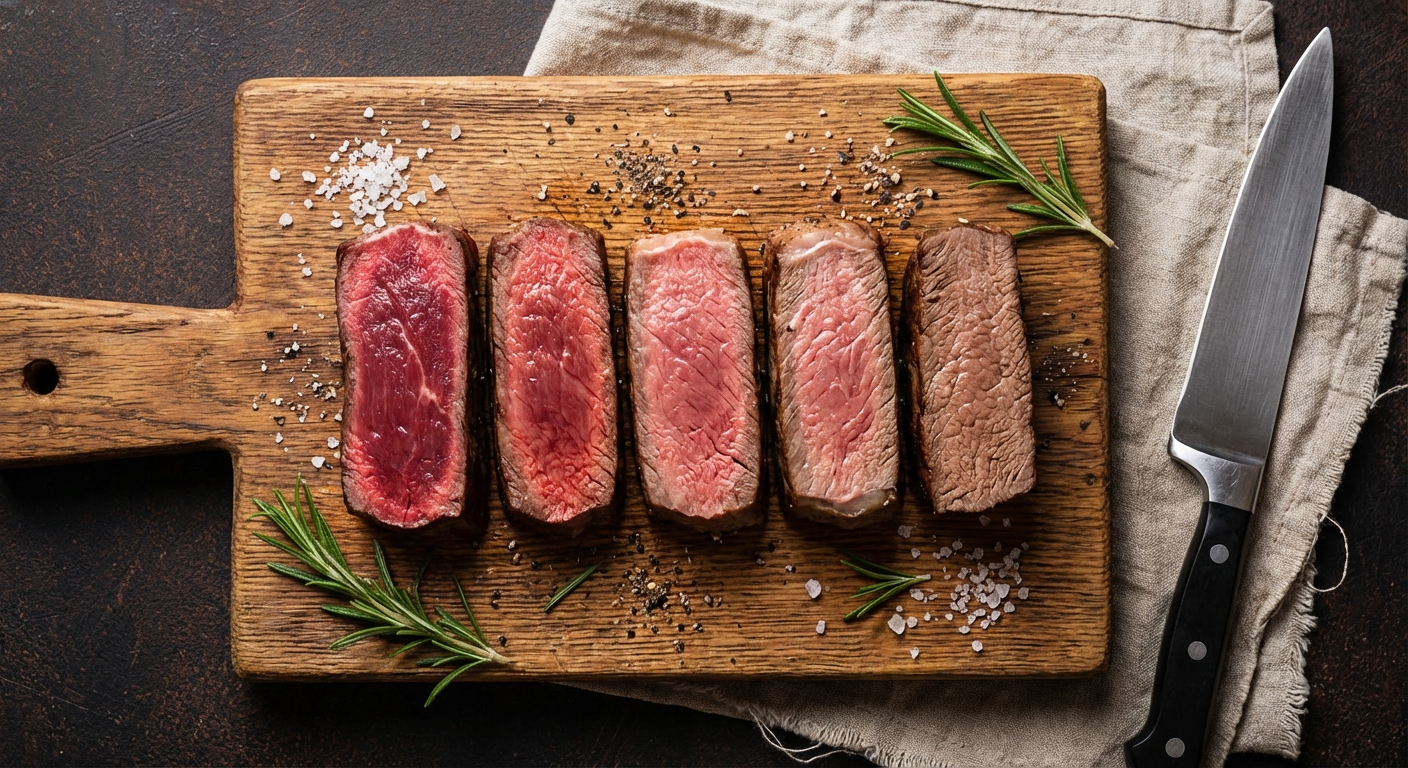
Temperature is the only reliable indicator of steak doneness. Not color (lighting varies), not touch (the "poke test" is wildly inconsistent), and definitely not time (too many variables). Get a thermometer and use these numbers.
The Temperature Chart
Two temperatures matter: the pull temperature (when to take it off the heat) and the final temperature (after resting, when carryover cooking adds 5–10°F).
| Doneness | Pull Temp | Final Temp | Center Color |
|---|---|---|---|
| Rare | 115–120°F | 120–125°F | Cool red center |
| Medium-Rare | 125–130°F | 130–135°F | Warm red center |
| Medium | 135–140°F | 140–145°F | Warm pink center |
| Medium-Well | 145–150°F | 150–155°F | Slight pink |
| Well Done | 155–160°F | 160°F+ | No pink |
My Honest Take on Each Level
Rare (120–125°F)
The center is cool and deep red. The marbling hasn't fully rendered. Works for extremely well-marbled cuts (Prime ribeye, A5 wagyu) where the fat melts at body temperature anyway. For leaner cuts, too cool for the flavor to fully develop.
Medium-Rare (130–135°F) — The Sweet Spot
This is where I eat my steaks, and where most butchers and chefs eat theirs. The center is warm and red, the fat has begun to render, and the Maillard crust on the outside provides contrast. You get maximum juiciness with developed flavor. This is the target for virtually every steak cut.
Medium (140–145°F)
Pink center, fully rendered fat. For heavily marbled cuts like Prime ribeye, medium is absolutely legitimate — the extra fat keeps things moist and the longer cooking develops more Maillard flavor on the crust. I don't love medium on lean cuts (filet, flank) but it's perfectly fine on fatty ones.
Medium-Well (150–155°F)
Barely pink, significantly drier. The only cut I'd willingly cook to medium-well is a heavily marbled wagyu — and even then, I'd rather go medium. At this temperature, you've lost most of the juiciness advantage that Prime or wagyu provides.
Well Done (160°F+)
I'm not going to lecture you about ordering well done. It's your steak, your money, your mouth. But I will say this: if you prefer well done, invest in the best-marbled steak you can afford. The fat is the only thing standing between well done and shoe leather. A well-done Select sirloin is genuinely unpleasant. A well-done Prime ribeye is at least edible.
Carryover Cooking: Why Pull Temperature Matters
When you remove a steak from heat, the exterior is much hotter than the center. That heat continues migrating inward, raising the center temperature by 5–10°F over the next 5–8 minutes. This is carryover cooking.
If you want a final temperature of 130°F (medium-rare), you need to pull at 120–125°F. If you wait until the thermometer reads 130°F to pull, you'll end up at 135–140°F — solidly medium.
Thicker steaks have more carryover (more stored heat). A 2" thick ribeye might carry over 10°F. A 1" flat iron might carry over 5°F. Adjust accordingly.
The Thermometer Question
Use an instant-read thermometer, not a leave-in probe (which creates a hole where juices escape). Insert into the thickest part of the steak from the side, reaching the center. Takes 2 seconds with a good thermometer.
The Thermapen ONE (~$100) is the gold standard. But a $15 instant-read from any kitchen store will get you 90% of the way there. The point is to use something instead of guessing.
Your steak deserves precision. Give it that.
More from the Blog
5 Mistakes I See Home Cooks Make with Steak
After decades of hearing customers describe their steak disasters, these are the five mistakes that come up over and over — and they're all easy to fix.
What to Ask Your Butcher (And Why You Should)
Your butcher knows things the label doesn't tell you. Here's how to ask the right questions and get the best meat for your money.
5 Meat Storage Myths That Are Ruining Your Beef (And How to Store It Properly)
After 40 years of seeing customers lose good meat to bad storage, here are the 5 biggest storage myths that are costing you money and ruining your beef.
The Butcher's Guide to Seasoning Beef: Salt, Pepper, and What Actually Matters
After 40 years of watching customers overcomplicate seasoning, here's the truth about what actually matters when seasoning beef.
Why Butchers Wince When You Say "Well Done" (But We'll Still Sell It to You)
Every butcher has an opinion about well-done steak. Here's mine — honest, science-based, and with actual advice for making well-done work.
The 7 Best Cheap Cuts of Beef That Eat Like Expensive Ones
You don't need to spend ribeye money to eat like royalty. A veteran butcher shares seven affordable cuts that punch way above their price point.
Is Grocery Store "Wagyu" Real? A Butcher Investigates
Wagyu has invaded grocery stores at surprisingly low prices. A veteran butcher explains what you're actually buying and whether it's worth your money.
How to Store Meat Properly: A Butcher's Complete Guide
Proper storage is the difference between great meat and wasted money. A veteran butcher covers refrigerating, freezing, thawing, and knowing when meat has gone bad.
Dry-Aged vs Wet-Aged Beef: What's the Real Difference?
Dry aging and wet aging both improve beef, but they produce fundamentally different results. A veteran butcher explains the science and helps you choose.
Why Grass-Fed Beef Isn't Always Better
Grass-fed has become a marketing magic word. But after four decades of cutting and eating both, I can tell you the reality is more complicated than the label.