5 Meat Storage Myths That Are Ruining Your Beef (And How to Store It Properly)
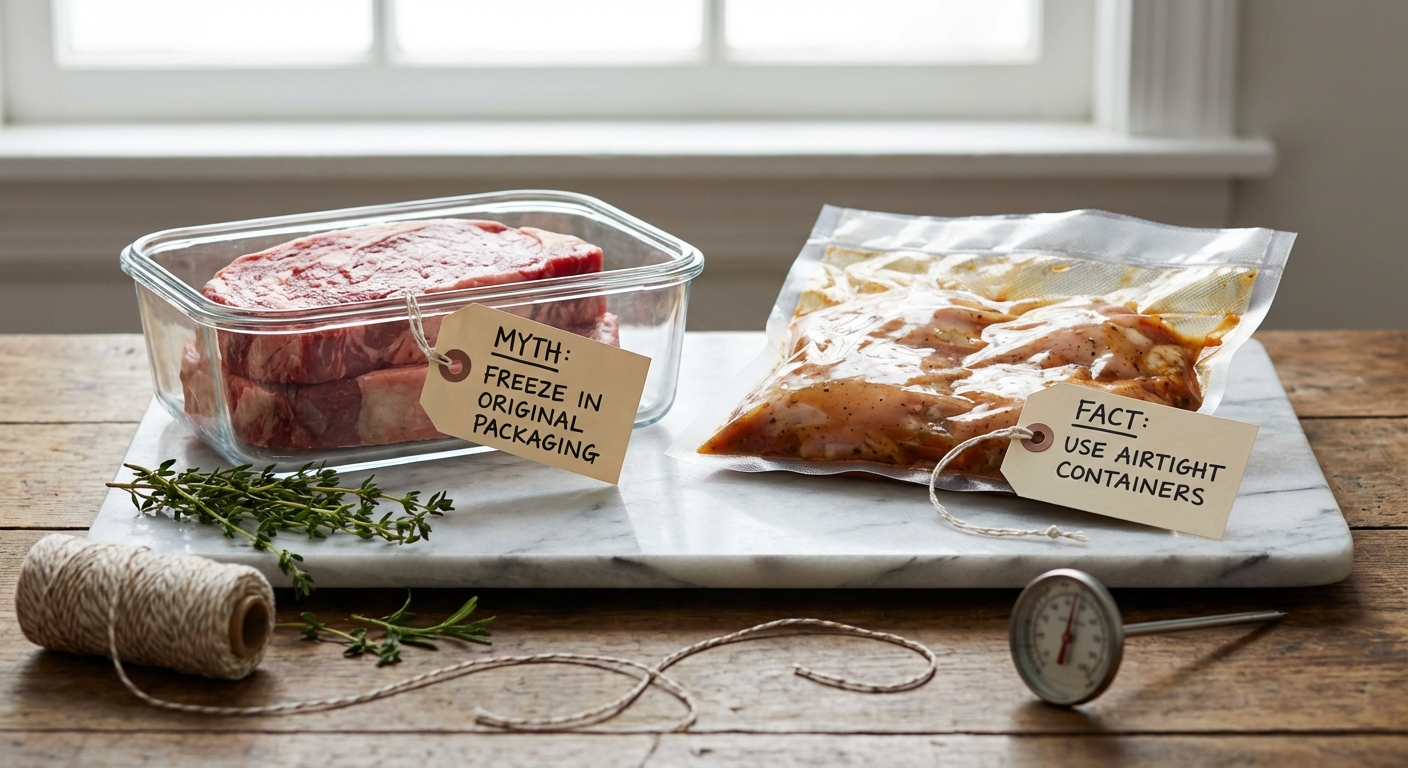
I've been in this business for 40 years, and I've seen more good beef go to waste because of improper storage than I care to count. Customers buy beautiful steaks, bring them home, stick them in the fridge without thinking, and come back a few days later complaining that something smells wrong. That $50 steak just became garbage.
Proper meat storage isn't rocket science, but it matters enormously. Here are the 5 biggest myths I hear, and the truth behind proper storage.
Myth 1: "It's Fine in the Package It Came In"
Wrong. That foam tray and plastic wrap from the grocery store? It's designed for display and short-term storage — maybe 2-3 days maximum. It's not airtight, which means oxidation and potential freezer burn if you decide to freeze it.
The reality: If you're not cooking within 2 days, rewrap your meat properly. Use plastic wrap to create an airtight seal, then add a layer of foil or place in a zip-lock bag. Squeeze out all the air — oxygen is the enemy of quality meat storage.
Myth 2: "Freezer Burn Is Dangerous"
Freezer burn isn't dangerous — it's just dried, dehydrated meat. Those gray-brown, leathery patches are areas where moisture has escaped due to air exposure. It's safe to eat, but the texture and flavor in those spots will be compromised.
The prevention: Vacuum sealing is the gold standard. If you don't have a vacuum sealer, wrap tightly in plastic wrap, then foil, then place in a heavy-duty zip-lock bag. The key is eliminating air exposure.
Myth 3: "Room Temperature Thawing Is Fine"
This is the big one that worries me. People take frozen meat out of the freezer and let it sit on the counter to thaw. The problem? The outer layer of the meat enters the "danger zone" (40-140°F) while the center is still frozen. This is where bacteria multiply rapidly.
The safe methods: Either thaw in the refrigerator (takes longer but safest), or use the cold water method — place sealed meat in cold water, changing the water every 30 minutes. Never thaw at room temperature.
Myth 4: "Ground Beef Lasts as Long as Steaks"
False. Ground beef has a much shorter shelf life because the grinding process mixes surface bacteria throughout the meat. A whole steak only has bacteria on the surface, which gets killed when you sear it. Ground beef has bacteria everywhere.
The truth: Ground beef should be used within 1-2 days of purchase. Steaks can last 3-5 days. This is why you should always cook ground beef sooner rather than later.
Myth 5: "Cold Is Cold — Any Fridge Will Do"
Your fridge needs to be at 35-38°F for safe meat storage. I've measured home fridges that run 45°F — that's dangerously warm. At temperatures above 40°F, bacterial growth accelerates significantly.
Buy a fridge thermometer: It's $5 and will tell you if your fridge is actually cold enough. Store meat on the bottom shelf, toward the back, where it's typically the coldest part of the fridge.
Proper Storage by Cut Type
| Cut Type | Refrigerator Shelf Life | Freezer Life (Vacuum-Sealed) |
|---|---|---|
| Whole steaks | 3-5 days | 6-12 months |
| Roasts | 3-5 days | 6-12 months |
| Ground beef | 1-2 days | 4-6 months |
| Stew meat/cubed | 1-2 days | 6-9 months |
| Vacuum-sealed (unopened) | 2-4 weeks | 6-12 months |
The 2-Hour Rule
Never leave raw or cooked beef at room temperature for more than 2 hours (1 hour if the ambient temperature is above 90°F). After that, bacterial growth enters unsafe territory. This applies to prep time, serving time, and leftovers.
Signs It's Gone Bad
Trust your senses, in this order:
- Smell: Fresh beef has a mild, slightly metallic smell. Spoiled beef smells sour, sweet, or like ammonia. If it smells bad, it is bad.
- Touch: Fresh beef feels moist but not slimy. If the surface is sticky or slimy, bacteria have multiplied significantly.
- Color: Some color change (red to brown) is normal due to oxidation. But gray/green combined with off-smell or slime means it's gone.
Freezing Tips
If you're not going to use meat within its refrigerator shelf life, freeze it. But freeze it properly:
- Pat the meat dry with paper towels
- Wrap tightly in plastic wrap, pressing out all air
- Wrap again in heavy-duty aluminum foil
- Place in a zip-lock freezer bag, squeezing out remaining air
- Label with cut, weight, and date
Vacuum-sealed meat can last 6-12 months in the freezer with minimal quality loss. Standard wrapping reduces this to 4-6 months.
Thawing Best Practices
- Best method: Refrigerator thawing (24-36 hours). Safest method — the meat never enters the danger zone.
- Faster method: Cold water bath (1-3 hours). Change water every 30 minutes to keep it cold.
- Emergency: Microwave defrost setting, but cook immediately after.
- Never: Room temperature thawing.
Good meat costs real money. Proper storage is one of the simplest ways to protect your investment and feed your family safely. Spend 30 seconds wrapping properly and save $50 of steak. Your wallet and your taste buds will thank you.
More from the Blog
5 Mistakes I See Home Cooks Make with Steak
After decades of hearing customers describe their steak disasters, these are the five mistakes that come up over and over — and they're all easy to fix.
What to Ask Your Butcher (And Why You Should)
Your butcher knows things the label doesn't tell you. Here's how to ask the right questions and get the best meat for your money.
Steak Doneness: A Butcher's Temperature Guide
The definitive temperature guide for steak doneness, including the often-overlooked pull temperatures and why carryover cooking changes everything.
The Butcher's Guide to Seasoning Beef: Salt, Pepper, and What Actually Matters
After 40 years of watching customers overcomplicate seasoning, here's the truth about what actually matters when seasoning beef.
Why Butchers Wince When You Say "Well Done" (But We'll Still Sell It to You)
Every butcher has an opinion about well-done steak. Here's mine — honest, science-based, and with actual advice for making well-done work.
The 7 Best Cheap Cuts of Beef That Eat Like Expensive Ones
You don't need to spend ribeye money to eat like royalty. A veteran butcher shares seven affordable cuts that punch way above their price point.
Is Grocery Store "Wagyu" Real? A Butcher Investigates
Wagyu has invaded grocery stores at surprisingly low prices. A veteran butcher explains what you're actually buying and whether it's worth your money.
How to Store Meat Properly: A Butcher's Complete Guide
Proper storage is the difference between great meat and wasted money. A veteran butcher covers refrigerating, freezing, thawing, and knowing when meat has gone bad.
Dry-Aged vs Wet-Aged Beef: What's the Real Difference?
Dry aging and wet aging both improve beef, but they produce fundamentally different results. A veteran butcher explains the science and helps you choose.
Why Grass-Fed Beef Isn't Always Better
Grass-fed has become a marketing magic word. But after four decades of cutting and eating both, I can tell you the reality is more complicated than the label.