Is Grocery Store "Wagyu" Real? A Butcher Investigates
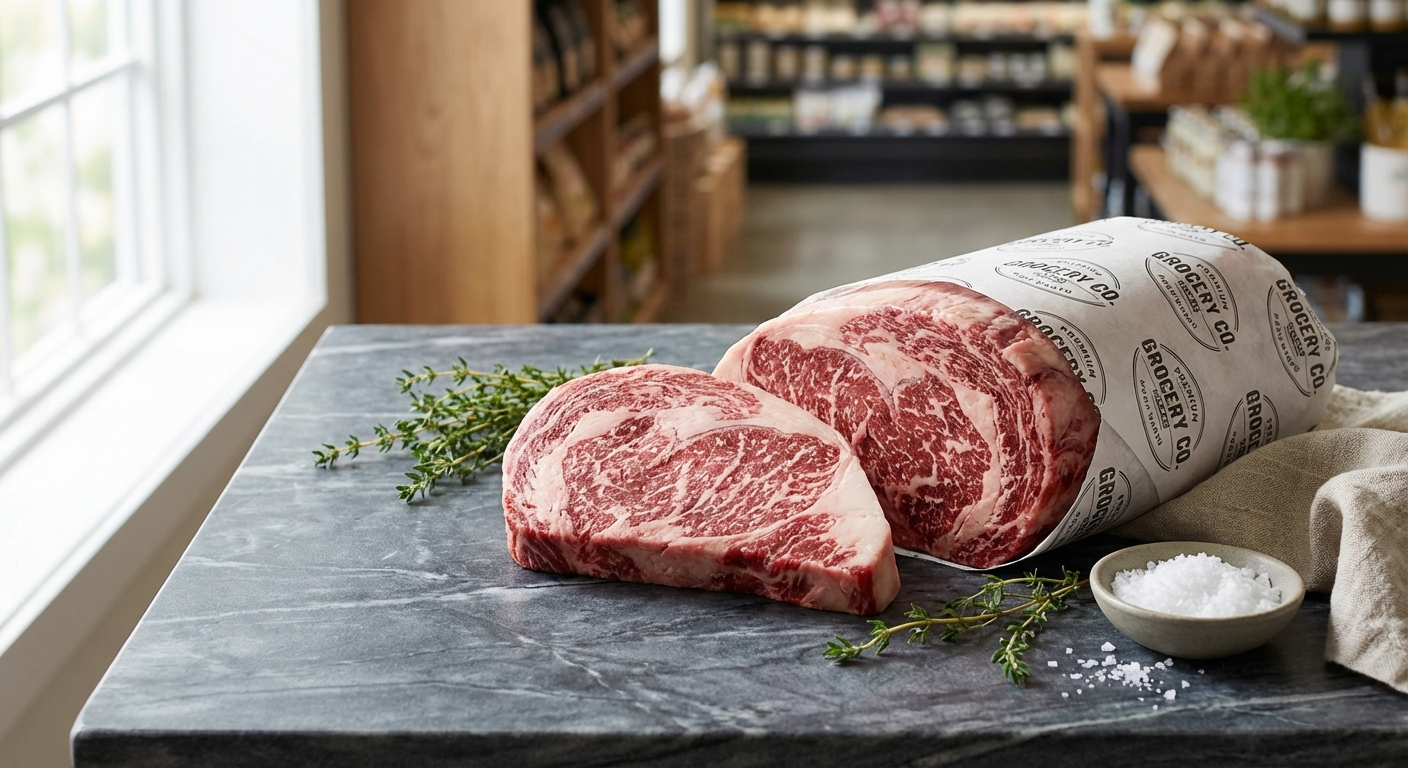
Five years ago, you'd never see "wagyu" at a regular grocery store. Today, it's everywhere — wagyu ground beef for $10/lb, wagyu burgers in the freezer section, "American Wagyu" steaks at $25/lb right next to the regular ribeyes. Walmart carries it. Costco carries it. Your local grocery store probably carries it.
The question on everyone's mind: is it real?
The short answer is: technically, probably yes. Meaningfully? That depends on what you think "wagyu" means.
What Grocery Store Wagyu Usually Is
The vast majority of wagyu sold at American grocery stores is F1 crossbred — an animal that is 50% Japanese wagyu genetics and 50% another breed (almost always Angus). One parent was a wagyu bull; the other was an Angus cow (or vice versa).
This is legally "American Wagyu." It contains genuine wagyu genetics. It is not misleading in a strictly factual sense.
But here's the context most labels leave out:
- The animal is half wagyu, half Angus
- It typically grades in the upper Choice to low Prime range on the USDA scale
- The BMS score is usually 5-7 — which is good, but not the BMS 9-12 that people imagine when they hear "wagyu"
- The flavor and marbling are noticeably better than standard Choice, but nowhere near Japanese A5
The Price Reality Check
Let me give you a framework for what wagyu at different price points actually is:
- $8-$12/lb (ground wagyu): Trim from F1 crossbred cattle. Legitimate wagyu genetics, makes a good burger. Worth trying but not transformative.
- $20-$35/lb (wagyu steaks at grocery): Almost certainly F1 crossbred (50% wagyu). Upper Choice to low Prime equivalent. Better than standard Choice, but you're paying a brand premium for "wagyu" on the label.
- $40-$80/lb (specialty retailer wagyu): Could be higher-percentage crossbred (F2-F4) or fullblood American wagyu. Ask for the breed percentage and BMS score.
- $80-$200+/lb: This is where you find fullblood American wagyu (BMS 9+) and Japanese A5. The real deal.
Is It Worth Buying?
Here's my honest assessment of grocery store wagyu (the $20-$35/lb steaks):
If you know what you're getting: F1 American Wagyu at $25/lb is genuinely good beef. It's typically better marbled than standard Choice and has a richer flavor. If you approach it as "really good beef" rather than "the wagyu experience," you'll probably be happy.
If you're expecting A5: You will be disappointed. The gap between F1 crossbred at BMS 6 and Japanese A5 at BMS 11 is enormous — they're essentially different categories of food. The grocery store version won't have that melting, buttery, overwhelming richness.
The value comparison: Here's what bugs me — a USDA Prime Angus ribeye might cost $22/lb and actually have similar or better marbling than an "American Wagyu" ribeye at $30/lb. The Prime steak is graded objectively; the wagyu is trading on a name. Sometimes you're better off buying Prime and saving $8/lb.
What to Look For
If you want to buy grocery store wagyu and make the most informed choice:
- Look at the actual marbling. Forget the label. Can you see heavy marbling through the packaging? If an "American Wagyu" steak looks leaner than the Prime ribeye next to it, the Prime is the better buy.
- Check for breed percentage. Some brands list it (e.g., "50% Wagyu, 50% Angus"). Many don't. If they don't disclose, assume F1 (50%).
- Look for BMS scores. Reputable wagyu brands provide BMS scores. If there's no BMS listed, the seller is relying on the word "wagyu" alone to justify the price.
- Compare to USDA Prime. If Prime is available at a lower price with similar visible marbling, buy the Prime.
The Wagyu Ground Beef Question
Wagyu ground beef at $8-$12/lb is one of the more reasonable grocery store wagyu products. The fat from wagyu cattle has a different fatty acid profile (higher in oleic acid, which is the same healthy monounsaturated fat in olive oil), and this carries through to the grind. Wagyu ground makes a noticeably richer, more buttery burger than standard 80/20.
Is it worth an extra $3-$5/lb over regular ground chuck? For a special burger night, yes. For Tuesday tacos, probably not.
The Bottom Line
Grocery store wagyu is real wagyu — technically. It's crossbred beef with genuine Japanese genetics that produces better-than-average marbling. It's not a scam, but it is a marketing play that relies on consumer confusion about what "wagyu" means.
If you want the real wagyu experience — the one that makes people's eyes go wide — you need fullblood wagyu (BMS 9+) or Japanese A5 from a specialty retailer like The Meatery. That costs $80-$200/lb and is worth it for a special occasion.
For everyday good eating, don't overthink it. USDA Prime from any breed is outstanding beef. "American Wagyu" at a fair price is a step up. And neither is anywhere close to the Japanese A5 that started the whole wagyu craze in the first place.
More from the Blog
5 Mistakes I See Home Cooks Make with Steak
After decades of hearing customers describe their steak disasters, these are the five mistakes that come up over and over — and they're all easy to fix.
What to Ask Your Butcher (And Why You Should)
Your butcher knows things the label doesn't tell you. Here's how to ask the right questions and get the best meat for your money.
Steak Doneness: A Butcher's Temperature Guide
The definitive temperature guide for steak doneness, including the often-overlooked pull temperatures and why carryover cooking changes everything.
5 Meat Storage Myths That Are Ruining Your Beef (And How to Store It Properly)
After 40 years of seeing customers lose good meat to bad storage, here are the 5 biggest storage myths that are costing you money and ruining your beef.
The Butcher's Guide to Seasoning Beef: Salt, Pepper, and What Actually Matters
After 40 years of watching customers overcomplicate seasoning, here's the truth about what actually matters when seasoning beef.
Why Butchers Wince When You Say "Well Done" (But We'll Still Sell It to You)
Every butcher has an opinion about well-done steak. Here's mine — honest, science-based, and with actual advice for making well-done work.
The 7 Best Cheap Cuts of Beef That Eat Like Expensive Ones
You don't need to spend ribeye money to eat like royalty. A veteran butcher shares seven affordable cuts that punch way above their price point.
How to Store Meat Properly: A Butcher's Complete Guide
Proper storage is the difference between great meat and wasted money. A veteran butcher covers refrigerating, freezing, thawing, and knowing when meat has gone bad.
Dry-Aged vs Wet-Aged Beef: What's the Real Difference?
Dry aging and wet aging both improve beef, but they produce fundamentally different results. A veteran butcher explains the science and helps you choose.
Why Grass-Fed Beef Isn't Always Better
Grass-fed has become a marketing magic word. But after four decades of cutting and eating both, I can tell you the reality is more complicated than the label.