Why Grass-Fed Beef Isn't Always Better
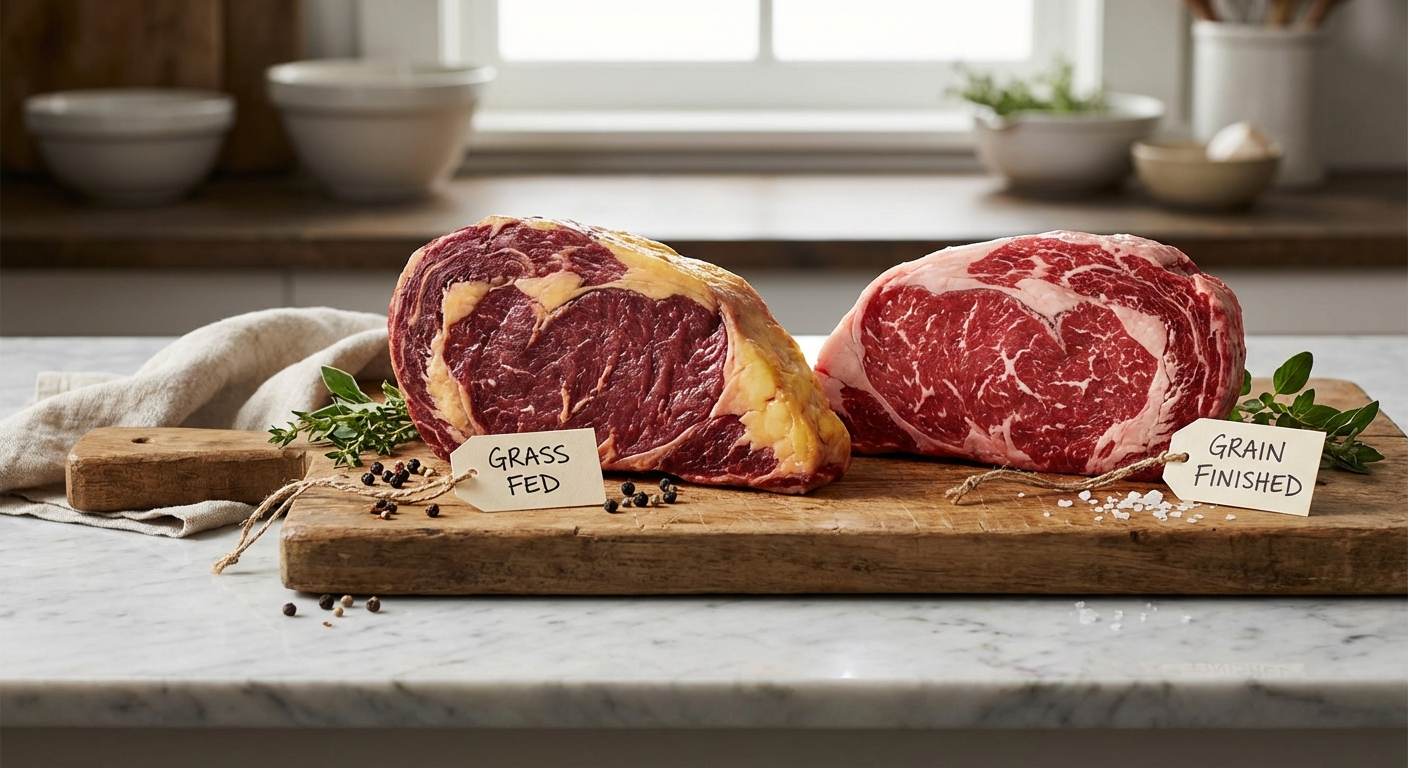
I'm going to say something that might get me in trouble with the wellness crowd: grass-fed beef is not automatically better than grain-finished beef. It's different. And "different" is not the same as "better."
I've been selling both for decades. I've watched grass-fed go from a niche product that nobody asked for to a premium marketing category that commands $5-$10 more per pound. And along the way, a lot of misinformation has stacked up — on both sides. Let me give you the honest breakdown from someone who has no financial stake in which one you buy.
What "Grass-Fed" Actually Means
Here's the first thing most people get wrong: all cattle eat grass. Every beef cow in America spends the majority of its life on pasture, eating grass and forage. The difference is what happens in the last 3-5 months before slaughter.
Grain-finished (conventional) cattle are moved to a feedlot for those final months and fed a diet of corn, barley, distillers grains, and other energy-dense feeds. This finishing period is what puts on the intramuscular fat — the marbling — that grades so well and tastes so rich.
Grass-fed/grass-finished cattle stay on pasture their entire lives. They eat only grass, hay, and forage from birth to slaughter. Because grass is less calorie-dense than grain, these animals take longer to reach market weight (24-30 months vs. 18-22 months) and typically carry less intramuscular fat.
The USDA's grass-fed label standard was withdrawn in 2016, which means today the term is largely self-regulated by producers and third-party certifiers like the American Grassfed Association. Not all "grass-fed" labels mean the same thing — some allow hay and silage, some don't. Read the fine print if it matters to you.
The Taste Difference Is Real — But Not What You Think
Grass-fed and grain-finished beef taste genuinely different, and this is where personal preference matters more than marketing claims.
Grain-finished beef has the flavor profile most Americans associate with "great steak." It's buttery, rich, and mild. The heavy marbling creates a juicy, fatty mouthfeel and a sweeter, more mellow flavor. When people picture a perfect ribeye, they're usually picturing grain-finished.
Grass-fed beef has a more complex, "mineral" flavor — some describe it as earthy, gamey, or more intensely "beefy." It's leaner, which means a firmer bite and less of that buttery richness. The flavor varies significantly by season, region, and what specific grasses the animal was eating. A grass-fed steak from lush spring pasture in Virginia tastes noticeably different from one finished on dry winter grass in Montana.
Neither flavor profile is objectively better. It's like asking whether Burgundy wine is better than Napa Cabernet — they're different expressions of the same product, and preference is personal.
But here's where I get honest: a lot of grass-fed beef sold at retail isn't very good. Not because grass-fed can't be excellent, but because producing great grass-fed beef requires skill, specific genetics, and good pasture management — and not every producer has all three. Bad grass-fed beef is tough, dry, and aggressively livery. Good grass-fed beef is nuanced and satisfying. The quality range is much wider than grain-finished, where the feedlot system produces more consistent results.
The Nutrition Argument Is Overblown
You'll see claims that grass-fed beef is dramatically healthier than grain-finished. The actual science is more nuanced:
- Omega-3 fatty acids: Grass-fed beef does have a higher omega-3 to omega-6 ratio. But the absolute amounts are tiny compared to fatty fish. You'd need to eat several pounds of grass-fed beef daily to get the omega-3 benefit of a single serving of salmon.
- CLA (conjugated linoleic acid): Grass-fed has 2-3x more CLA, which has shown some health benefits in lab studies. Again, the absolute amounts in beef are small relative to what was used in research.
- Vitamins A and E: Slightly higher in grass-fed, due to the beta-carotene in grass. The difference is real but modest.
- Total fat and calories: Grass-fed is leaner, so yes, a grass-fed steak has fewer calories and less total fat than a well-marbled grain-finished steak. But if you wanted low-fat protein, you'd eat chicken breast. People eat steak for the fat.
The honest summary: grass-fed beef has a marginally better nutritional profile in some categories, but the differences are not large enough to be a primary reason for choosing one over the other. If someone tells you grass-fed beef will transform your health, they're selling you something.
The Environmental Argument Is Complicated
The environmental case for grass-fed is also more nuanced than advocates claim. Yes, well-managed rotational grazing can sequester carbon in soil and improve pasture ecosystems. That's real and documented. But grass-fed cattle take longer to reach market weight, which means more total methane emissions per pound of beef produced. They also require more land per animal.
The environmental impact depends enormously on the specific operation — a well-managed rotational grazing system is very different from cattle on overgrazed scrubland. "Grass-fed" alone doesn't tell you which one you're getting.
When Grain-Finished Is the Better Choice
I recommend grain-finished beef when:
- You're grilling steaks. The higher marbling in grain-finished beef provides a bigger margin of error. It stays juicy even if you slightly overcook it. A grass-fed ribeye cooked to medium is noticeably drier than a grain-finished one at the same temperature.
- You want consistency. Grain-finished beef from USDA Choice or Prime grades delivers reliable quality every time. The flavor and texture are predictable.
- You're feeding people who expect "normal" steak. Most Americans' palates are calibrated to grain-finished flavor. If you're cooking for guests who aren't adventurous eaters, grain-finished is the safer bet.
- Budget matters. Dollar for dollar, grain-finished offers more marbling and tenderness. A $12/lb Choice grain-finished ribeye will out-eat most $18/lb grass-fed ribeyes in a blind tasting — not because grass-fed is bad, but because marbling is king for steak satisfaction.
When Grass-Fed Is Worth It
I recommend grass-fed when:
- You have a trusted source. A good grass-fed producer makes all the difference. If you've found a farm or brand whose grass-fed beef you genuinely enjoy, stick with them. Quality varies wildly between producers.
- You're making ground beef, stews, or braises. The leaner profile of grass-fed works well in preparations where you're adding fat through cooking (butter, oil, braising liquid) or where the beef is mixed with other ingredients. Grass-fed ground beef makes excellent burgers when you add a little extra fat.
- You prefer the flavor. Some people genuinely prefer the more complex, mineral flavor of grass-fed. If that's you, own it. Taste is personal.
- You want to support a specific farming practice. If supporting pasture-based agriculture is important to you, grass-fed from a known producer is a meaningful way to do that. Just know you're paying for the farming method, not necessarily a "better" steak.
What I Actually Tell Customers
When someone asks me "should I buy grass-fed?" I ask them three questions: What are you cooking? Have you had grass-fed before and liked it? And what's your budget?
If they're making a braised short rib dish, grass-fed works great. If they want a ribeye for a Saturday night dinner and they've never had grass-fed, I steer them toward a well-marbled Choice grain-finished steak and tell them to try grass-fed another time as an experiment — not as a $25 gamble on a special dinner.
The worst outcome is someone spending premium money on grass-fed steak because they think they "should," cooking it the same way they'd cook grain-finished, and being disappointed. That helps nobody.
Buy what you enjoy eating. That's the only rule that matters.
More from the Blog
5 Mistakes I See Home Cooks Make with Steak
After decades of hearing customers describe their steak disasters, these are the five mistakes that come up over and over — and they're all easy to fix.
What to Ask Your Butcher (And Why You Should)
Your butcher knows things the label doesn't tell you. Here's how to ask the right questions and get the best meat for your money.
Steak Doneness: A Butcher's Temperature Guide
The definitive temperature guide for steak doneness, including the often-overlooked pull temperatures and why carryover cooking changes everything.
5 Meat Storage Myths That Are Ruining Your Beef (And How to Store It Properly)
After 40 years of seeing customers lose good meat to bad storage, here are the 5 biggest storage myths that are costing you money and ruining your beef.
The Butcher's Guide to Seasoning Beef: Salt, Pepper, and What Actually Matters
After 40 years of watching customers overcomplicate seasoning, here's the truth about what actually matters when seasoning beef.
Why Butchers Wince When You Say "Well Done" (But We'll Still Sell It to You)
Every butcher has an opinion about well-done steak. Here's mine — honest, science-based, and with actual advice for making well-done work.
The 7 Best Cheap Cuts of Beef That Eat Like Expensive Ones
You don't need to spend ribeye money to eat like royalty. A veteran butcher shares seven affordable cuts that punch way above their price point.
Is Grocery Store "Wagyu" Real? A Butcher Investigates
Wagyu has invaded grocery stores at surprisingly low prices. A veteran butcher explains what you're actually buying and whether it's worth your money.
How to Store Meat Properly: A Butcher's Complete Guide
Proper storage is the difference between great meat and wasted money. A veteran butcher covers refrigerating, freezing, thawing, and knowing when meat has gone bad.
Dry-Aged vs Wet-Aged Beef: What's the Real Difference?
Dry aging and wet aging both improve beef, but they produce fundamentally different results. A veteran butcher explains the science and helps you choose.