5 Mistakes I See Home Cooks Make with Steak
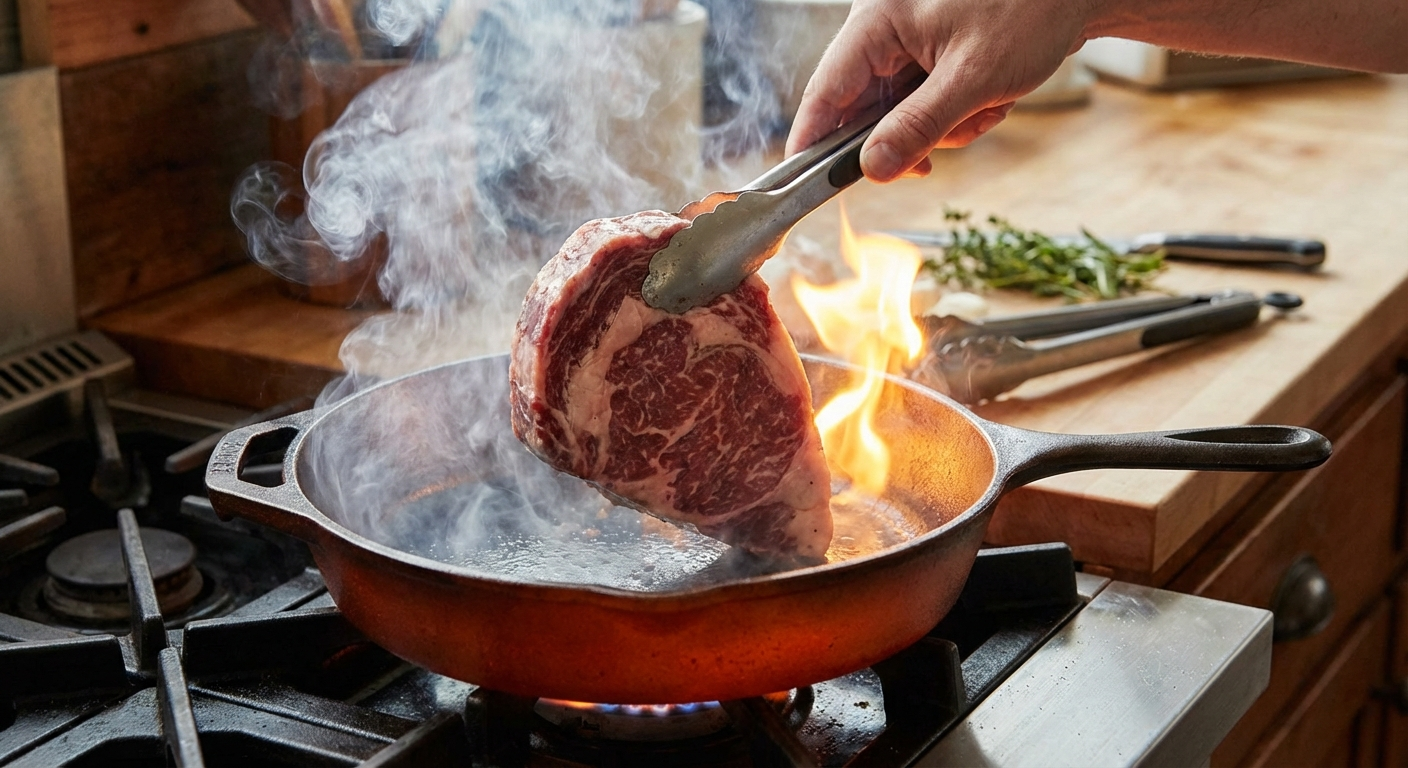
I've had thousands of conversations with customers over the years. They buy a beautiful steak, take it home, and come back telling me it was "tough" or "dry" or "just not as good as the steakhouse." Nine times out of ten, the steak was fine — the execution was the problem.
Here are the five mistakes I see most often, and they're all easy to fix.
1. Starting with a Cold Steak
A steak straight from the fridge has a cold center that takes longer to come up to temperature, which means the exterior overcooks before the middle reaches medium-rare. The result: a gray band of overcooked meat around a cool center.
Fix: Pull your steak from the fridge 30–45 minutes before cooking. Not to "come to room temperature" (it won't in that time) but to take the deep chill off. Even going from 38°F to 50°F makes a meaningful difference in how evenly the steak cooks.
2. Not Hot Enough
This is the big one. Most home cooks don't get their pan or grill hot enough. A medium-heat pan won't produce the Maillard reaction you need for a proper crust — you'll get a gray, steamed surface instead of a deeply browned sear.
Fix: Get your cast iron smoking hot. Literally — you should see wisps of smoke before the steak goes in. For grilling, let the grates preheat for at least 15 minutes with the lid closed. High heat for a short time is the whole game.
3. Cooking by Time Instead of Temperature
"Four minutes per side for medium-rare" is a rough guideline at best. Your steak is a different thickness, your heat is different, your starting temperature is different. Time-based cooking is guesswork.
Fix: Use an instant-read thermometer. Pull at 125°F for medium-rare (it'll rise to 130–135°F during rest). This single tool will improve your cooking more than any other purchase. The ThermoWorks Thermapen is the gold standard ($70–$100) but even a $15 instant-read works.
4. Not Resting the Steak
Cutting into a steak the second it comes off the heat sends juices flooding onto the cutting board. Those juices should be in the meat, not on your plate. The difference between a rested and unrested steak is dramatic — we're talking about losing up to 5–10 times more juice.
Fix: Rest your steak for 5–8 minutes after cooking. No tent needed for a single steak. Just set it on a warm plate or cutting board and walk away. It won't get cold — the residual heat keeps it warm.
5. Cutting with the Grain
This matters most on cuts with visible grain — flank, skirt, hanger, and brisket — but it matters on every cut to some degree. Cutting with the grain (parallel to the fibers) leaves long, intact muscle strands that are tough to chew through.
Fix: Look at the meat surface and identify the direction the fibers run. Cut perpendicular to them — against the grain. For flank and skirt steak, slice as thin as you can. This single technique can make a $10/lb flank steak eat like a $25/lb cut.
The Good News
None of these mistakes require more skill. They require awareness. A hot pan, a thermometer, five minutes of patience, and a sharp knife cutting the right direction — that's the whole formula. Fix these five things and your home steaks will rival most restaurants.
More from the Blog
What to Ask Your Butcher (And Why You Should)
Your butcher knows things the label doesn't tell you. Here's how to ask the right questions and get the best meat for your money.
Steak Doneness: A Butcher's Temperature Guide
The definitive temperature guide for steak doneness, including the often-overlooked pull temperatures and why carryover cooking changes everything.
5 Meat Storage Myths That Are Ruining Your Beef (And How to Store It Properly)
After 40 years of seeing customers lose good meat to bad storage, here are the 5 biggest storage myths that are costing you money and ruining your beef.
The Butcher's Guide to Seasoning Beef: Salt, Pepper, and What Actually Matters
After 40 years of watching customers overcomplicate seasoning, here's the truth about what actually matters when seasoning beef.
Why Butchers Wince When You Say "Well Done" (But We'll Still Sell It to You)
Every butcher has an opinion about well-done steak. Here's mine — honest, science-based, and with actual advice for making well-done work.
The 7 Best Cheap Cuts of Beef That Eat Like Expensive Ones
You don't need to spend ribeye money to eat like royalty. A veteran butcher shares seven affordable cuts that punch way above their price point.
Is Grocery Store "Wagyu" Real? A Butcher Investigates
Wagyu has invaded grocery stores at surprisingly low prices. A veteran butcher explains what you're actually buying and whether it's worth your money.
How to Store Meat Properly: A Butcher's Complete Guide
Proper storage is the difference between great meat and wasted money. A veteran butcher covers refrigerating, freezing, thawing, and knowing when meat has gone bad.
Dry-Aged vs Wet-Aged Beef: What's the Real Difference?
Dry aging and wet aging both improve beef, but they produce fundamentally different results. A veteran butcher explains the science and helps you choose.
Why Grass-Fed Beef Isn't Always Better
Grass-fed has become a marketing magic word. But after four decades of cutting and eating both, I can tell you the reality is more complicated than the label.