Dry-Aged vs Wet-Aged Beef: What's the Real Difference?
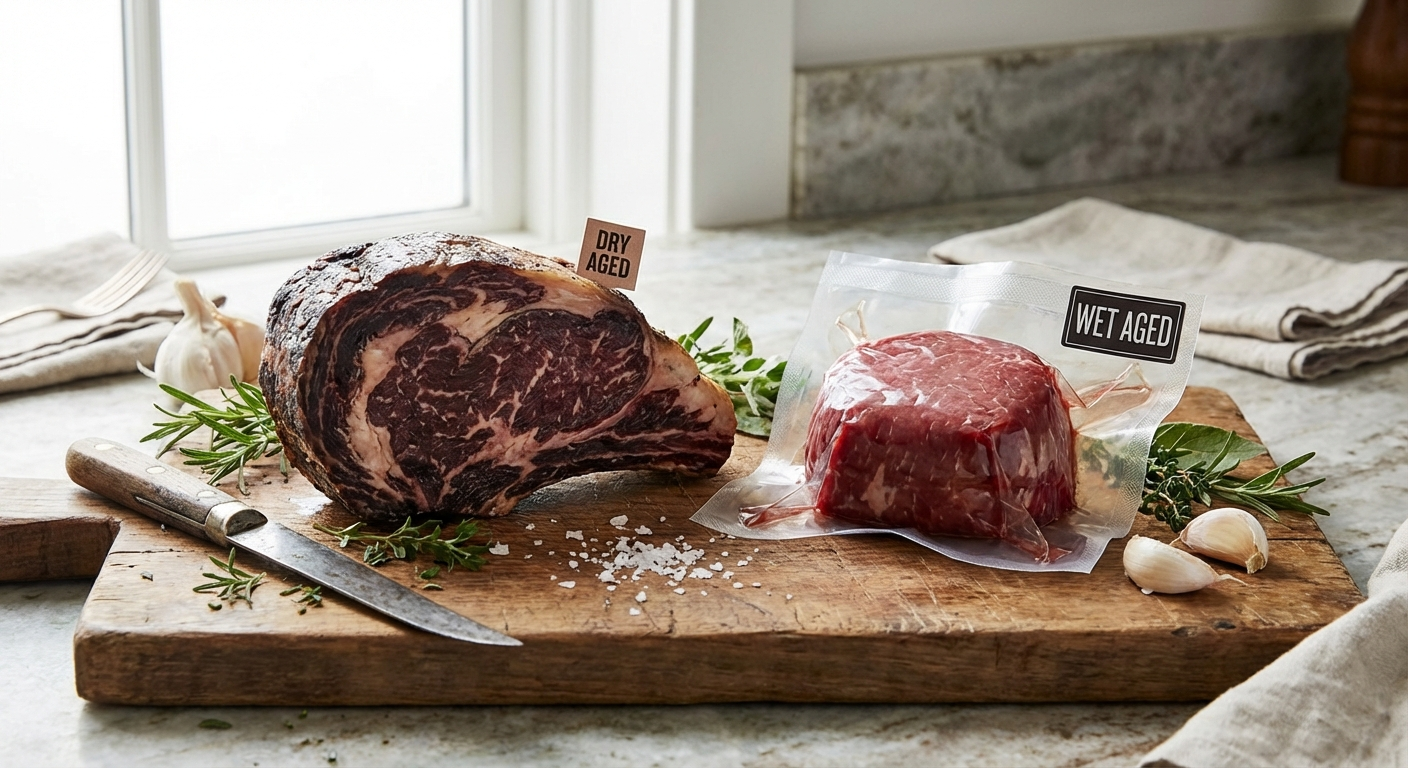
Every piece of beef you eat has been aged in some way. The question isn't whether your beef was aged — it's how. And the two methods produce fundamentally different products that taste, feel, and cost very differently.
Dry aging and wet aging both improve tenderness through the same enzymatic process. But that's where the similarities end. Let me walk you through what actually happens in each method and help you decide which is worth your money.
How Wet Aging Works
Wet aging is simple: beef is sealed in vacuum-sealed plastic (Cryovac) and held at refrigerated temperatures (28-32°F) for a period of time — typically 14 to 28 days, though sometimes longer.
What happens inside the bag:
- Natural enzymes (calpains and cathepsins) break down muscle proteins, increasing tenderness
- No moisture is lost — the sealed environment traps everything
- No air exposure means no surface drying, no mold development, no bark formation
- Over extended periods, a slight metallic or "serumy" flavor can develop from the accumulated purge (the red liquid in the bag, which is myoglobin + water, not blood)
The key insight: Wet aging is the default method for virtually all commercial beef. When meat ships from the packing plant to the distributor to the grocery store, it's sitting in Cryovac. That transit time — often 14-21 days — IS the aging. You've been eating wet-aged beef your entire life.
How Dry Aging Works
Dry aging exposes beef to a controlled environment — 34-38°F, 80-85% humidity, constant air circulation — for 21 to 120+ days without any packaging.
What happens in the aging room:
- The same enzymatic tenderization as wet aging
- Moisture evaporates through the surface — 15-30% weight loss depending on time. This concentrates the remaining flavor compounds.
- A bark forms on the surface — a dried, darkened crust that must be trimmed before cutting
- Lipid oxidation and microbial activity on the surface create unique flavor compounds — nutty, funky, complex notes that don't exist in wet-aged beef
The Taste Difference
This is where it matters most:
Wet-aged beef tastes like fresh, clean beef — "normal" beefy flavor because that's what we're all used to. Tender (especially at 21+ days), with a straightforward meat taste.
Dry-aged beef tastes concentrated and complex. At 30 days, you notice a nuttiness and deeper savory quality. At 45 days, there's a funky, almost blue cheese-like note. At 60+ days, the funk becomes pronounced — divisive but extraordinary for enthusiasts.
The flavor difference is not subtle. In a blind tasting, most people can immediately identify the dry-aged steak. Whether they prefer it is another question — some people find the funk off-putting. But those who love it tend to love it passionately.
The Cost Difference
| Factor | Wet Aged | Dry Aged |
|---|---|---|
| Weight loss | None | 15-30%+ (evaporation) |
| Trim loss | None | 10-15% (bark removal) |
| Total yield loss | ~0% | 25-40% |
| Equipment needed | None (just Cryovac) | Climate-controlled room |
| Time cost | Minimal (happens during transit) | 30-60+ days of inventory holding |
| Price premium | None (it's the default) | 30-50% over equivalent non-aged |
The math is straightforward: if you start with $15/lb beef and lose 30% to drying and 10% to trimming, your 100 lbs of starting product yields 60 lbs of saleable aged beef. That $15/lb just became $25/lb — before adding equipment, labor, or margin.
Which Cuts Benefit Most
Best for dry aging:
- Bone-in rib section (ribeye) — the gold standard. Fat cap protects the meat, heavy marbling concentrates beautifully, bone adds protection.
- Bone-in strip loin — excellent results, slightly leaner than rib.
Not worth dry aging:
- Tenderloin — too lean, no fat cover, dries out excessively
- Individual steaks — too small, bark-to-meat ratio is terrible
- Braising cuts — they'll cook for hours in liquid; the nuanced dry-aged flavor is lost
Wet aging benefits virtually everything because the only effect is tenderization, and all cuts benefit from being more tender. This is why it's the industry default — it improves quality at zero cost.
Which Should You Buy?
Here's my decision framework:
- For everyday steaks: Wet-aged is perfectly fine. Most USDA Prime and Choice beef at retail has been wet-aged 14-21 days. It's tender and flavorful.
- For a special occasion: Try a 30-45 day dry-aged bone-in ribeye. It's a genuinely different experience — more intense, more complex, more memorable.
- If you're not sure: Buy one of each — a wet-aged and a dry-aged steak of the same cut and grade. Cook them identically. Taste side by side. You'll instantly understand the difference and know your preference.
Neither is "better" — they're different products for different preferences. But if you've never had a properly dry-aged steak, you owe it to yourself to try one at least once. It might change what you think beef can taste like.
More from the Blog
5 Mistakes I See Home Cooks Make with Steak
After decades of hearing customers describe their steak disasters, these are the five mistakes that come up over and over — and they're all easy to fix.
What to Ask Your Butcher (And Why You Should)
Your butcher knows things the label doesn't tell you. Here's how to ask the right questions and get the best meat for your money.
Steak Doneness: A Butcher's Temperature Guide
The definitive temperature guide for steak doneness, including the often-overlooked pull temperatures and why carryover cooking changes everything.
5 Meat Storage Myths That Are Ruining Your Beef (And How to Store It Properly)
After 40 years of seeing customers lose good meat to bad storage, here are the 5 biggest storage myths that are costing you money and ruining your beef.
The Butcher's Guide to Seasoning Beef: Salt, Pepper, and What Actually Matters
After 40 years of watching customers overcomplicate seasoning, here's the truth about what actually matters when seasoning beef.
Why Butchers Wince When You Say "Well Done" (But We'll Still Sell It to You)
Every butcher has an opinion about well-done steak. Here's mine — honest, science-based, and with actual advice for making well-done work.
The 7 Best Cheap Cuts of Beef That Eat Like Expensive Ones
You don't need to spend ribeye money to eat like royalty. A veteran butcher shares seven affordable cuts that punch way above their price point.
Is Grocery Store "Wagyu" Real? A Butcher Investigates
Wagyu has invaded grocery stores at surprisingly low prices. A veteran butcher explains what you're actually buying and whether it's worth your money.
How to Store Meat Properly: A Butcher's Complete Guide
Proper storage is the difference between great meat and wasted money. A veteran butcher covers refrigerating, freezing, thawing, and knowing when meat has gone bad.
Why Grass-Fed Beef Isn't Always Better
Grass-fed has become a marketing magic word. But after four decades of cutting and eating both, I can tell you the reality is more complicated than the label.